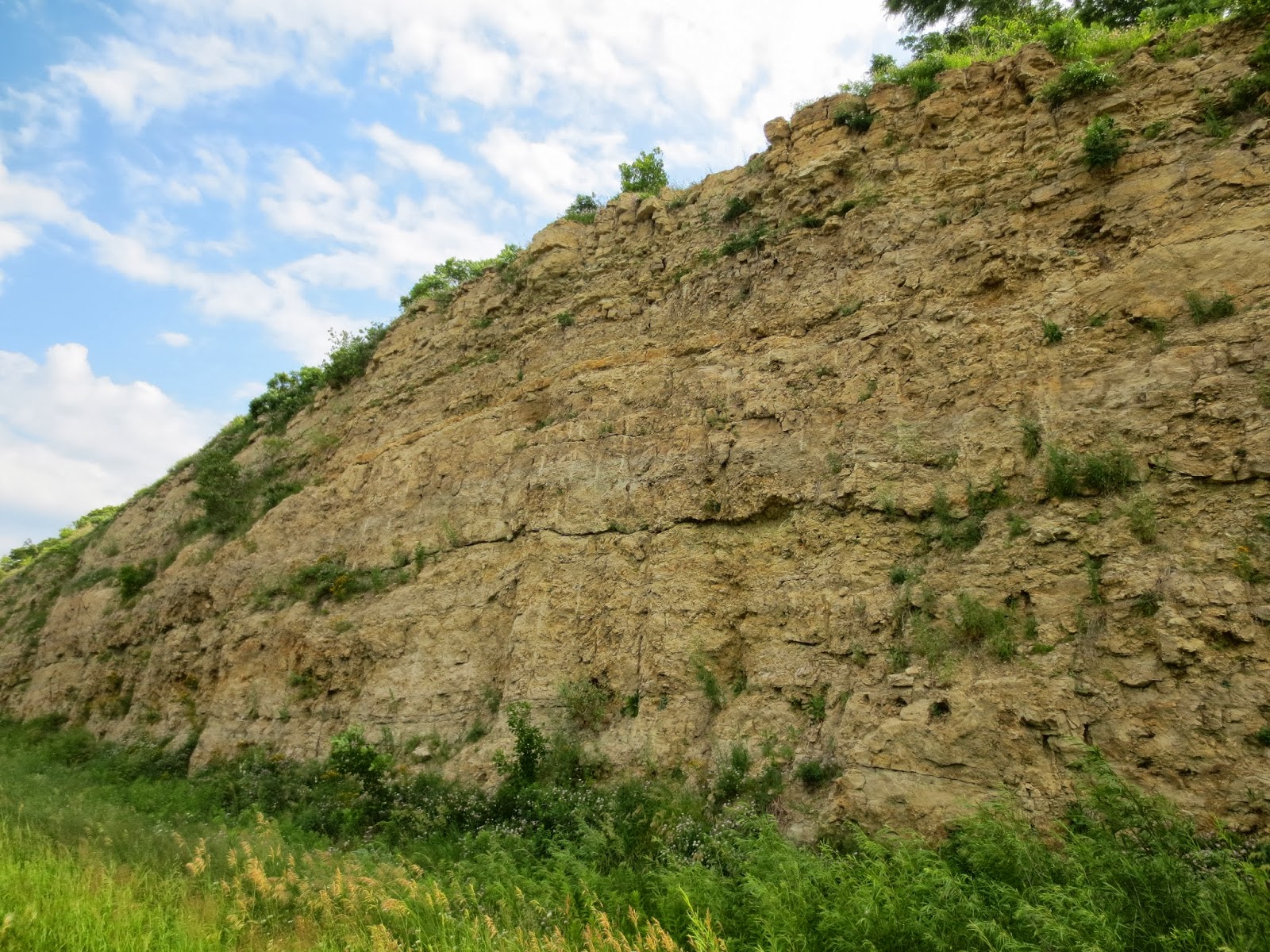
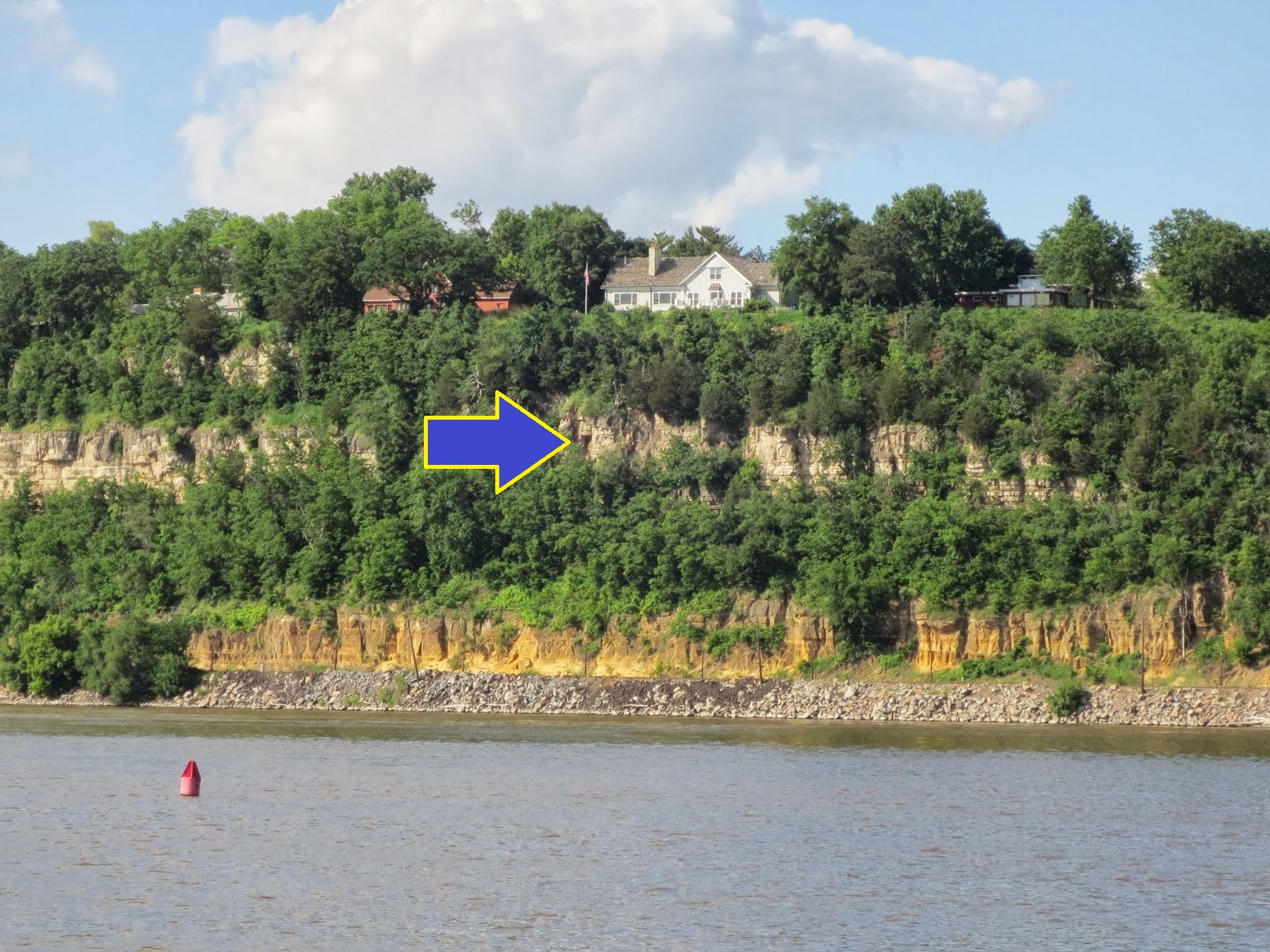
The Prairie du Chien Group is composed of the (lower) Oneota Dolomite and the (upper) Shakopee Formation, and was deposited in the Early Ordovician (485-444 Mya). Both formations are dominantly dolomite. The Oneota is about 50 feet thick, and the Shakopee is usually between 80-100 feet thick. The two formations were deposited during separate events (Oneota: 485-478 Mya; Shakopee: 478-470 Mya), likely separated by several million years. Stromatolites (sheets of fossilized cyanobacteria) and snail shells are found in the Prairie du Chien.
The Shakopee Formation is a sandy dolomite, which becomes increasingly sandier the lower you go. This unit was deposited on a carbonate shelf, with sand coming in intermittently from shallower waters.
There is an unconformable contact between the Oneota and the Jordan, the Oneota and the Shakopee, and the Shakopee and the St. Peter. This means that erosion occurred between all of the contacts, and there is missing time.
The Shakopee Formation is quarried for aggregate, and the Oneota Dolomite is quarried for building materials. The Prairie du Chien has many fractures, joints, and solution cavities through which water flows easily–about 80% of the groundwater pumped in the Twin Cities comes from the Prairie du Chien-Jordan aquifer.