Click HERE to return to all rocks.
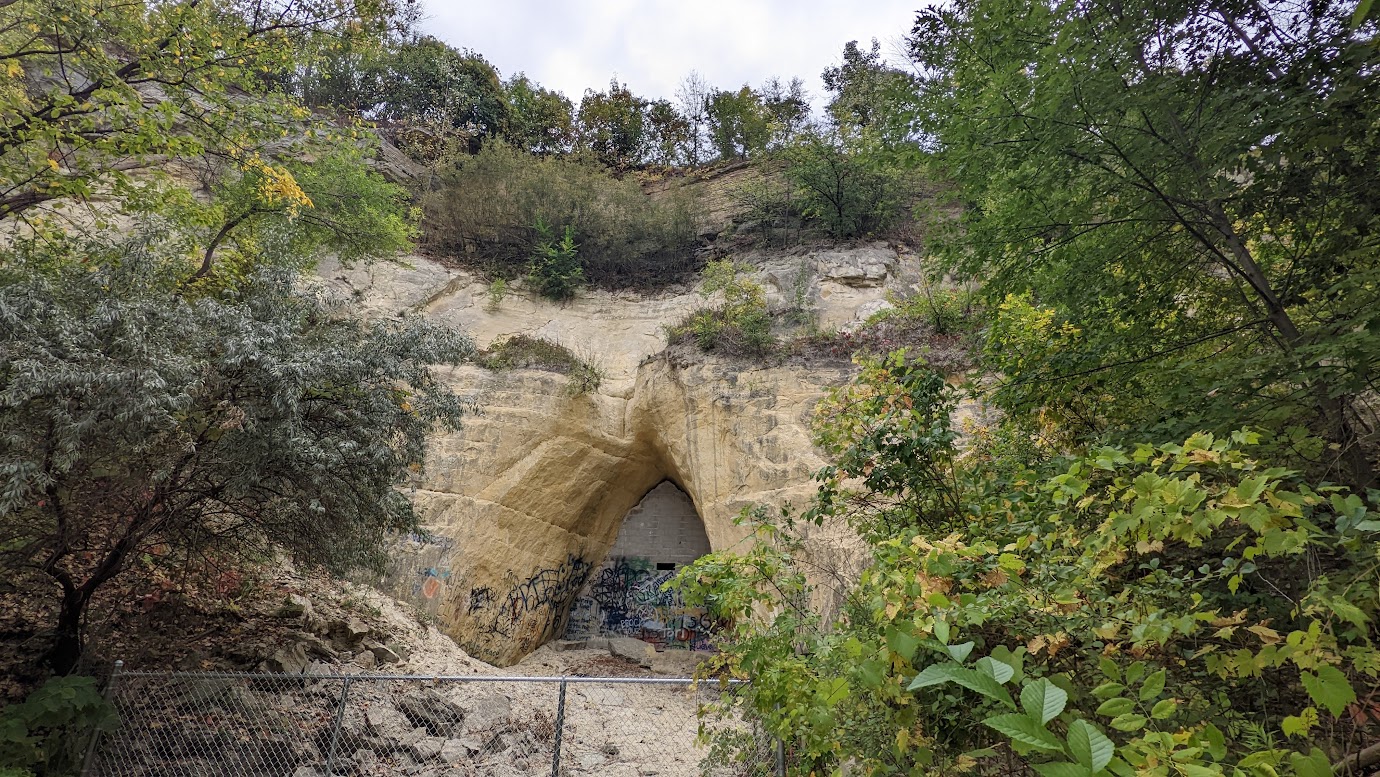
Photo of a cave cut into the St. Peter Sandstone near St. Paul. Graffiti is visible near ground level. Image is original. September 2022.
The St. Peter Sandstone underlies the Glenwood Shale. It was deposited during the Middle-Late Ordovician Period (485-444 million years ago). The St. Peter Sandstone is the first unit in the transgressive sequence (sea level rise). It was deposited in beaches, submarine waves, and coastal eolian (wind-blown) dunes.
This unit is thick (>100 feet) and massive (unbedded). It is a very pure white quartz sandstone (though it weathers to a muddy gray), and falls apart easily. This lends itself well for excavation (see: creation of the Andersen Library caverns) and the formation of caves. That property also lends itself to vandalization.
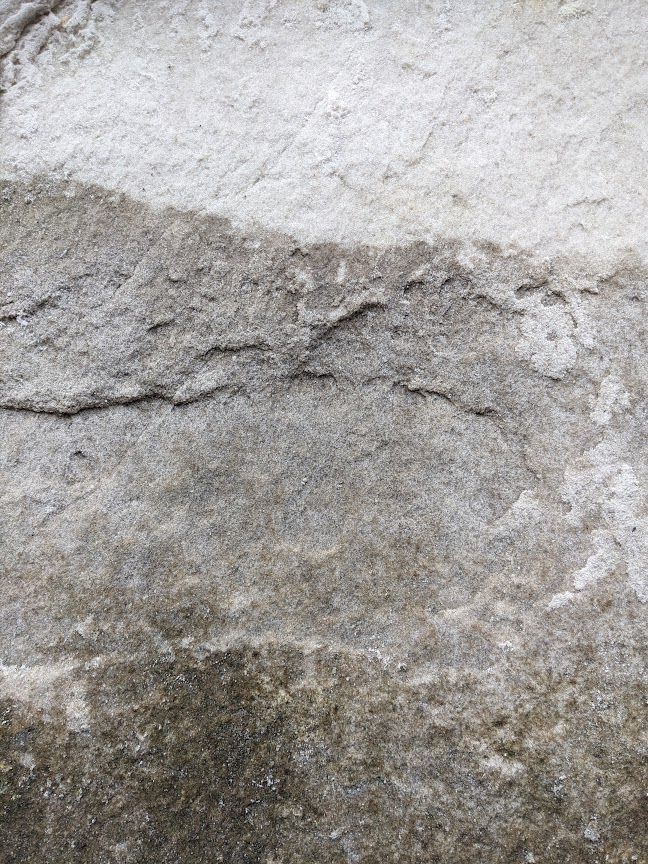
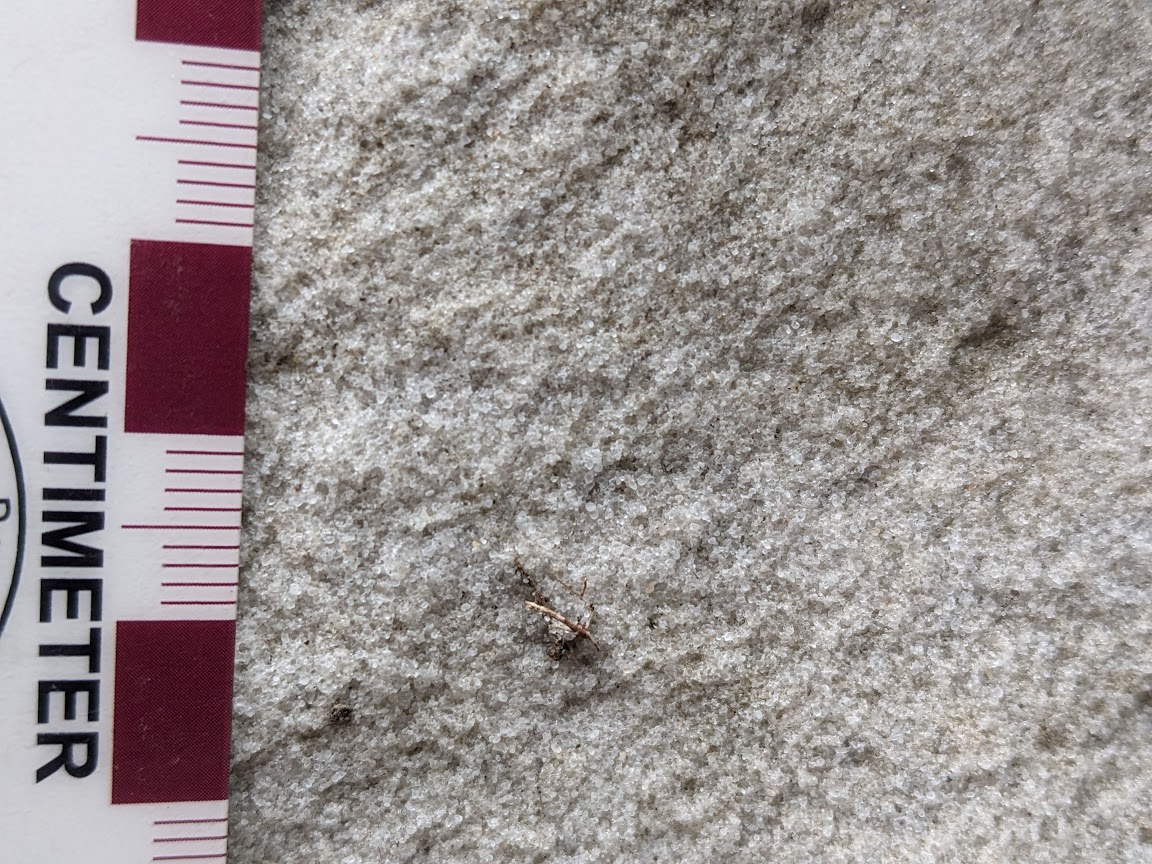
The different colors of the St. Peter Sandstone. Images are original. March 2026.
The St. Peter has a spread of about 680 square miles throughout the Twin Cities metro area. More largely, this formation underlies 225,000 square miles throughout the Midwest.
The St. Peter has been mined for glassmaking purposes, abrasives, and frac sand. Caves carved into the St. Peter have been used for archives, sewers, and cheese production, among other uses. This layer contains both confined and unconfined aquifers, depending on location.
In other states (Ohio, Kentucky, and Tennessee), the St. Peter Sandstone holds oil and gas reservoirs.
Brick, G. (2024). A perennial controversy: The St. Peter Sandstone of the American Midwest. Journal of Geography and Cartography, 7(2), 6588. https://doi.org/10.24294/jgc.v7i2.6588🗗
Mossler, John H.. (1985). RI-33 Sedimentology of the Middle Ordovician Platteville Formation Southeastern Minnesota. Retrieved from the University Digital Conservancy, https://hdl.handle.net/11299/60754🗗
https://equatorialminnesota.blogspot.com/2014/03/fossils-in-st-peter-sandstone.html🗗
https://equatorialminnesota.blogspot.com/2014/02/practical-guide-to-mnrrametro-area.html#more🗗
https://www.pca.state.mn.us/sites/default/files/mm-overview.pdf 🗗